Rosary Team
Saints From the Maronite Church Mounted Icon Prints (10-Pack) – Premium 4x6" Silver-Halide Lustre Art with Contemporary Round Corners
Couldn't load pickup availability
🆓🚚 Free Shipping on USA orders of this Pack!
Bring the rich spiritual heritage, sacred traditions, and profound history of the Maronite Church into your home, prayer space, or parish. This premium 10-pack collection features meticulously detailed flush mount icon prints showcasing foundational saints, courageous martyrs, and revered holy figures. Each print is engineered for beauty and longevity, serving as a durable, tactile visual aid for daily prayer, meditation, and devotional reflection.
Read more about the collection
Premium Features & Product Specifications
Featured Icons & Saints in the Collection
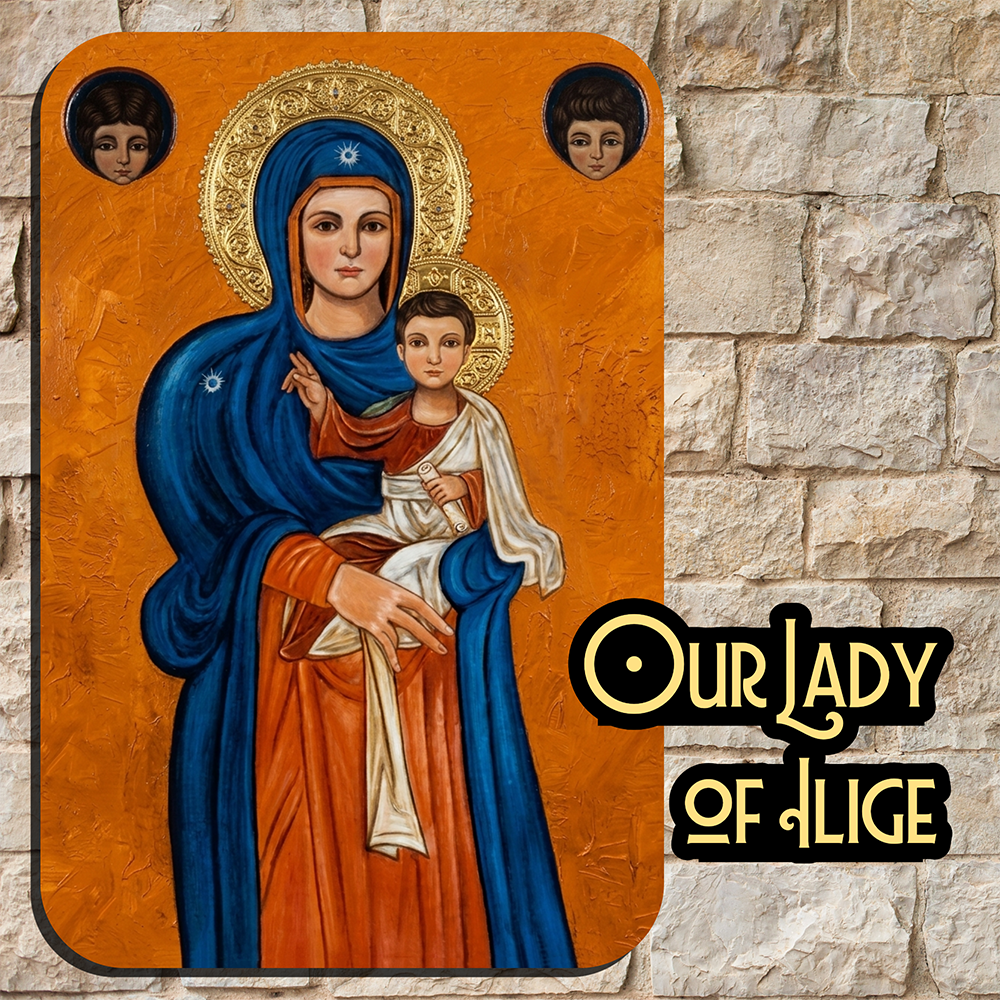
Also known as Our Lady of the Maronites, this sacred 10th-century Syriac icon portrays the Virgin Mary and the Child Jesus. Named after the patriarchal Monastery of Our Lady of Ilige in Mayfouq, Lebanon, this revered image served as the deeply personal icon of Maronite Patriarchs during epochs of intense persecution.
The spiritual father, anchor, and patron of the Maronites, from whom the Maronite Church draws its name. The Maronite rite stands as one of the 22 Eastern Catholic rites in full communion with the Holy See of Rome, uniquely distinguished as the only Eastern rite Church known by the name of its founding holy figure.
Instrumental in organizing the Maronite Church during the late seventh and early eighth centuries, Saint John Maron (Youhana Maron) reigned as the first Maronite Patriarch. He is remembered as an eloquent preacher, teacher, apostle, and a great spiritual and military leader who guided his flock through historic tribulations.
Saint Sharbel Makhlouf was a humble monk and priest who deeply loved the solitude of prayer, the supreme reverence of worship, quiet reflection on the Holy Eucharist, and the freedom of absolute simplicity. Seeking God from his youth, he lived out his monastic vows with unyielding devotion until his death.
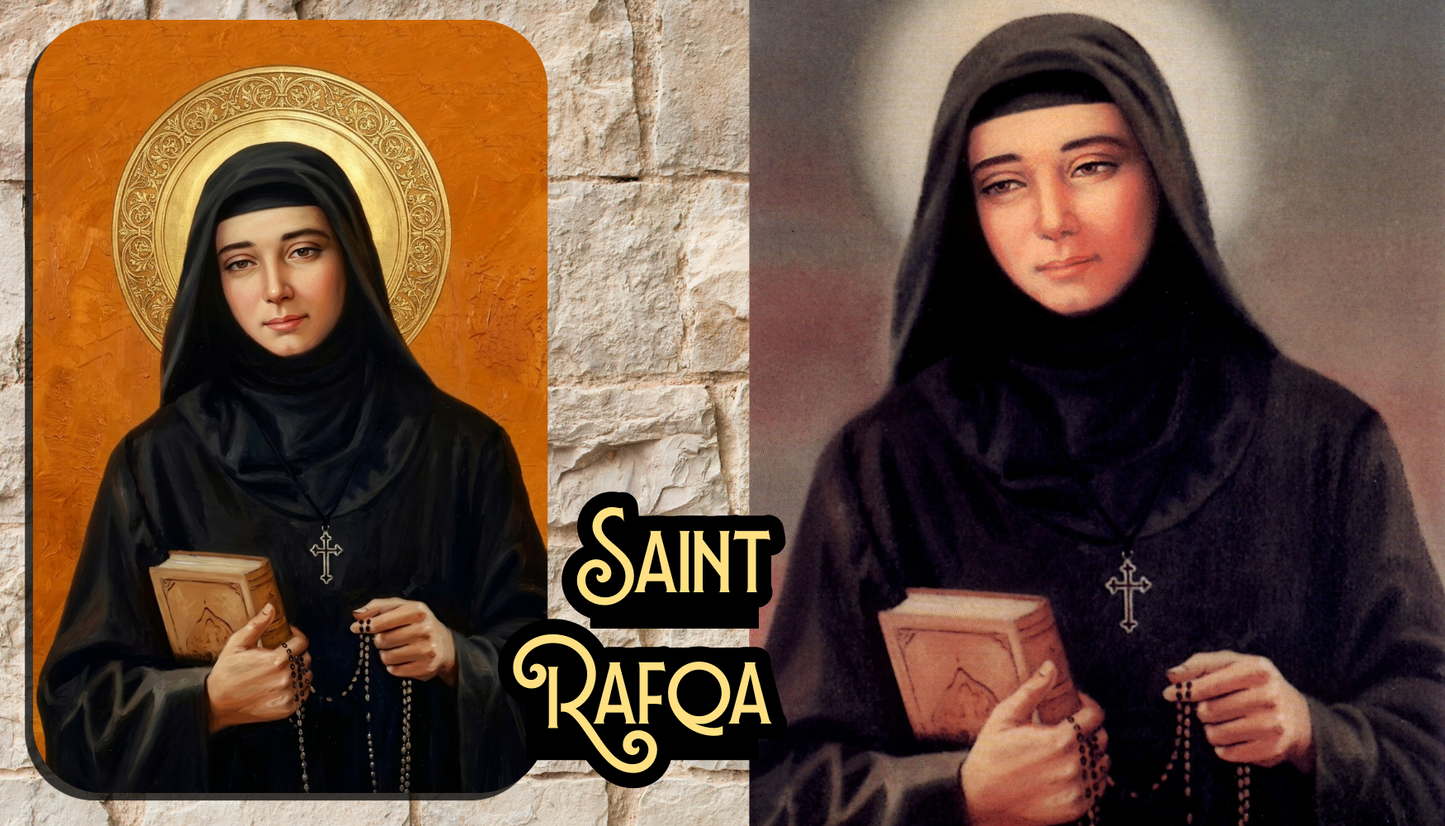
Living from 1832 to 1914, Saint Rafqa is a Lebanese Maronite nun widely recognized as the patron saint of the sick and those who have lost parents. Canonized in 2001, she spent the final 29 years of her life enduring immense physical agony and complete blindness, embracing her sufferings as a profound spiritual offering unified with Christ.
A revered Lebanese Maronite monk and priest (1808–1858) who served as the spiritual teacher, guide, and mentor to Saint Charbel Makhlouf. Affectionately known as the "Saint of Kfifan," he was an ascetic scholar who dedicated his life to instructing seminarians and guiding souls toward holiness.
Francis, Abdel Moati, and Raphael Massabki were three devout Maronite Catholic laymen from Damascus, Syria, honored for their unwavering faith. During the anti-Christian riots of 1860, they sought refuge in a Franciscan church and chose martyrdom over renouncing Christ. They were canonized on October 20, 2024, by Pope Francis in St. Peter's Square.

A Maronite monk and wonderworker celebrated for his deep piety, profound humility, and selfless service. Born in Lehfed, Lebanon, he was called the "angel of the family" for his gentle nature. Preferring quiet prayer over chaos, his life was defined by the simple, powerful realization: "God can see me."
Revered as the 57th Maronite Patriarch of Antioch (1630–1704), he was a brilliant 17th-century historian universally acclaimed as the "Father of Maronite History." He was beatified by the Catholic Church on August 2, 2024, marking a historic milestone as the first Maronite Patriarch to receive this honor.
Acclaimed as the "Father of Greater Lebanon," Patriarch Elias Hoyek (1843–1931) founded the Congregation of the Maronite Sisters of the Holy Family. Elected Patriarch of Antioch and of All the East for the Maronites in 1899, he shepherded his people for more than 30 years with extraordinary pastoral sensitivity, focused heavily on catechism and clergy formation.
Share